


Hunter Biden painting An Crann Bethadh, available: https://www.hunterbiden.com/work/an-crann-bethadh
“An Crann Bethadh” is a Celtic term for The Tree of Life.
What would you say if you didn’t worry about how people reacted?
Buffy Life Lessons is typically about the lessons I learn from pop culture, Buffy the Vampire Slayer specifically. But watching the beginning of Season 3, I was struck by:
1. A third over-arching theme that joins the lessons about teamwork and sacrifice I usually cite as BtVS’s primary themes. And that theme is about what should be buried, what should be brought to light, and the discernment to know the difference, and;
2. The lesson I could teach our Scooby Gang about that theme, given the chance. And oddly enough, it was seeing Hunter Biden’s story that connected those dots for me.
If you’re not an extremely online person like me, you might not even be aware that Hunter Biden, the prodigal Biden son, has been everywhere these days. I see him mostly on Threads, since that’s where I hang out.
Hunter is sharing his two cents on a multitude of topics, political and otherwise. Underlying all his comments is his reality that because he’s got no secrets left; he’s got no dignity to protect, he is finding liberation in that complete lack of privacy.
Perhaps he could have continued to hide…conventional wisdom (or at least P.R. advice) might have told him he should…lie low, wait it out even longer, avoid the public eye and further public humiliation. But from his perspective, he’s conquered the worst things he could go through (his brother’s death, his rock bottom addiction, knowing his behavior caused his family a lot of pain and embarrassment).
This is a guy who is not afraid of anyone shaming him, exposing him, taking anything from him because he has said he has nothing left to be held over him.
So, now we hear from the son who’s really pissed off at how people treat his dad. From the addict who had the most public rock bottom one could imagine. From a guy who stayed silent, while others spoke volumes about him and is now silent no more.
No one had asked him his story. No one was sitting around waiting for it. We thought we knew all about him, but we didn’t ask what he thought. And he didn’t wait for us to ask him. Because what he is sharing isn’t just for us, it’s about being true to himself too.
What would you learn if you were willing to pick up a shovel and dig?
Most of us are not like Hunter Biden, though. We keep our cards close to the vest. Maybe we’re protecting ourselves. Maybe we think we’re protecting other people.
And if you’re on the other side of someone not telling you the whole story? Maybe you haven’t created a space where it’s safe to tell that story. Or maybe you just didn’t ask, because (now, be honest with yourself) you really didn’t want to know that whole story. But I’ve learned firsthand that a “Don’t ask, don’t tell” approach in your relationships with others, even in the workplace, can be a lose-lose situation.
Last year I was on a podcast where I told two stories from my career in managing people, set about 15 years apart:
The first story is about the first time I ever fired someone for poor performance. HR backed me up that I had been more than clear that he wasn’t meeting my expectations, but they never advised me to stop hammering him with those expectations and maybe ask him WHY he wasn’t meeting them. Every conversation was me clarifying what I needed and him promising to do better. In the meeting where I fired him, I learned his dad was dying, and he was driving two hours each way to visit him frequently. He had kept it buried for months. Probably he thought it was “personal” and didn’t belong in the workplace (this was more than 20 years ago, so certainly culture has shifted a bit since then). At the time, I felt terrible that I hadn’t known about this. I couldn’t believe he hadn’t come to me and told me. But if I’m going to call that out as a bad call on his part…burying something that was going to rise up and bite him in the butt…I also have to call out that a) he clearly didn’t feel safe telling me and b) which isn’t surprising, since I’d never asked him if something personal was going on.
~15 years later, someone gave their notice. Now, conventional wisdom tells you that once someone does, they are already mentally gone. You shouldn’t try to talk them out of it. By then I’d been around long enough to say, “Screw conventional wisdom,” because this would be a real loss to the company. So, I told them I did not accept their resignation and asked them to tell me what was going on. I had learned that even when you think you’re creating a safe environment, people will bury their truths. But the best decisions are made when you know the real story.
Here’s the podcast episode where I tell these stories in more detail:
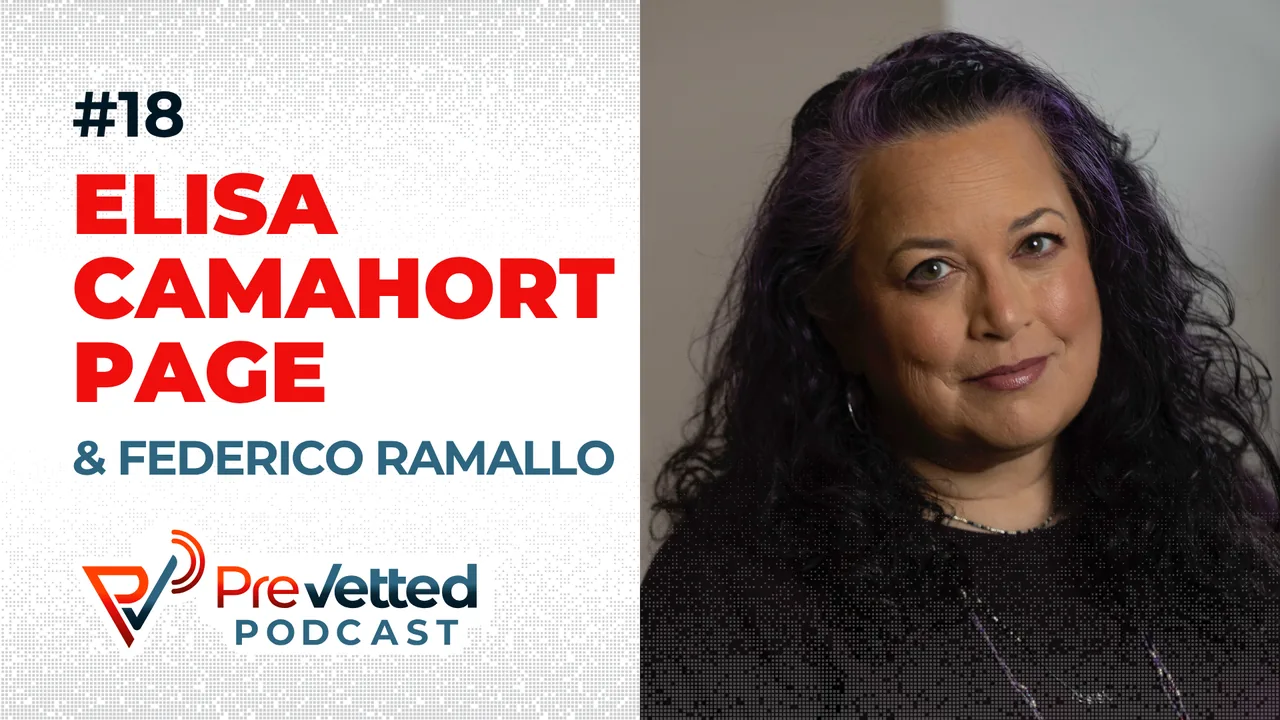
And in fact I wrote about the second story at some length for Optionality:

See, conventional wisdom isn't always right. I did a lot better the second go-around, because I had learned that there’s always more to the story. And that people may not volunteer every relevant piece of information, so you should always keep asking.
When you know what someone else really wants (to move closer to her family, in this case, and build a life there) and what you really need (a particular job done, and one that doesn’t really preclude remote work), you may just find a way to make things work. Listen to other people and also your gut, and don’t assume you can’t be the exception that proves a rule! Knowing that’s an option you can shoot for is its own kind of liberation from the constraints of “how it’s usually done.”
But what about boundaries?
I have a maxim I often share that authenticity is when everything you say is true, but you don’t have to say everything that is true. It’s called “boundaries,” right?
Sure, yes, but…we’re not always drawing them in the right place. There’s a difference between setting boundaries and burying your feelings.
In the Buffyverse, there’s the very on-the-nose fact that Buffy and the Gang patrol thegraveyardwaiting for freshly-made vampires to rise again from where they are literally buried. Less literal, though, are the recurring examples of how trying to keep something buried, even to protect others, will come back to bite you…kind of like a vampire.
I already wrote about this theme at the outset of my re-watch of Season 2, because the Scooby Gang is great at the teamwork and the sacrifice, and the eventual defeat of the Big Bad each season, but they’re not so great at processing the trauma they go through. They quip; they show up for each other; they fight together, but they don’t talk about their feelings…especially when they’re negative feelings about one another.
Season 3 kicks off the same as Season 2, with no one saying what they really feel. They’re mature enough to recognize that negative feelings don’t define their relationships. It starts out with an intent to just keep moving forward. Sounds reasonable.
But they are not mature enough to realize that never expressing those feelings is only going to keep them buried for so long…and increase the chance that when they do rise up, it’s not going to be pretty. A pattern of have a fight, make up, move on, but never really get to the root cause of the fight? Welcome to human relationships 😬
When they fight there’s not a drop of empathy on exhibit…not from Buffy about how her mom or friends might have felt. And not from them towards her. Because once they do start sharing, they don’t ask a single question to find out how they felt, not what they did.
Buffy: "You have no idea what happened to me or what I was feeling-”
Xander: "Did you even try talking to anybody?”
Buffy: "What's the point? There was nothing anyone could do. I just had to deal on my own.”
Xander: "And you see how well that went. You can't just bury stuff, Buffy! It'll come right back up to get you...”
My experiences learning and growing as an empathetic manager represents a realistic middle ground between Hunter Biden going ham after having everything taken from him…telling all, sharing all, no boundaries left to lose or protect…and the Scooby Gang setting up emotional walls that injure one another as they tumble down.
I doubt you and I are ever going to end up in either Hunter or the Gang’s position, so we won’t have to test this theory, but we can think differently about two things, both of which can be true:
We’re allowed to set boundaries for ourselves, but we’re also better off when we interrogate ourselves just a little about whether our current boundaries serve us or silence us? When do our boundaries actually constrain us from expressing our true self, our core values?
Of course we should respect the boundaries other people set for themselves, but depending on the relationship, how can we signal that they would be safe to extend their boundaries a little further with us? What questions can we ask, which of our own vulnerabilities can we share, how do we increase respect and empathy?
Do you think of yourself as someone who lays your cards on the table or holds them close to your vest? Have you ever wished you leaned a little more in the other direction?
Buffy: “I don't want any trouble. I just want to be alone and quiet, you know, with a chair, and a fireplace, and a tea cozy. I'm not even sure what a tea cozy is, but I want one. Instead, I get trouble.”
Signposting and sharing
📺 Next week’s recapping will cover Buffy Season 3, episodes 3 and 4. There’s an important new character introduced in episode 3, a sort of Yin to Buffy’s Yang. Dark to her light. You get the idea.
🛠️ Tool of the week/Claude’s Fable 5: If you’re a Free or Pro account holder with Anthropic’s Claude, you had some limited-time-only access to their powerful new Fable 5 model. Most folks will tell you that switching around your model will help you get the most bang for your Anthropic buck. There’s plenty I wouldn’t use Fable 5 for, because it does suck up your credits/tokens. Still I did one thing that is really worth doing once. I gave the model access to my entire online newsletter corpus (the word Claude, and maybe AI in general loves to use for a body of work). It collected all my solo newsletters for Optionality, all of my Buffy newsletter issues, and 6 years+ of my This Week-ish newsletter archive. It analyzed it for topic areas, recurring themes, and my own signature moves as a writer. it helped me identify what I think is the best structure or approach to be my baseline to create against. There was more to it, but here’s the best part: A couple of weeks ago I shared that I did what I call brainscape work, where I self-reported what I thought about my work. This effort validated where and how that brainscape shows up in the work I’ve been publishing for almost a decade. Fable 5 is for processing a lot of info, and for me, as a writer, processing my own body of work, across multiple publications, was a meaningful exercise.
📚 Book of the Week: I’ve had a slow month of reading here in July. I’ve started and DNF’ed two books, which is extremely unusual for me. I’m struggling to keep going on the latest in my Toni Morrison read-through of 2026 (Paradise, if you’re wondering…it is just so dark and tragic right out of the gate.) but I did finish Dave Egger’s latest novel, Contrapposto. I’m not a loyal Eggers reader…I’ve never even read his famous Heartbreaking Work of Staggering Genius. But I did love What the What, and Contrapposto is definitely worth the read. It follows two primary characters from their early teens into their 60s and 70s, all while musing in the nature of art and commerce and craft and happiness. It’s a book with big themes told about two people from when they are small. There are secondary characters who are so finely drawn that you fall in love with them in addition to the main characters. I think you may enjoy it most of all if you love or make or think about art.
My daily tarot card:

Today I drew The Ten of Stakes. Stakes (or Wands) is the suit of creativity, innovation, and inspiration. Tens generally represent that you are nearing the culmination of a journey or effort. This card is a signal of hope to me that my current efforts may be indeed culminating in a clear path ahead. I’ve been doing a lot of introspective work lately. Introspective work is not my best work (or perhaps my favorite work), but I want to figure out what I want my primary focus to be as Optionality winds down. I know I will always be a bit peripatetic. But it’s good to have a central thesis or a personal mission against which to make decisions and make choices. This card makes me think I’m both on the right track, and that it’s the right time to make some decisions and take some next steps. (Good thing too, since my current web host just raised my price 20%+ for next year…so I better have a good reason to stay or go!)
A card pull or full reading can help make a specific decision. Or can set the tone for your week. Either way, options are here, my Buffy deck and I are at your service! https://calendly.com/elisacp
Out in the world this week:

I am probably not the only one among my readers to notice the hot takes about Taylor’s wedding (to herself I guess) and Madonna’s age and the timing of the wedding, the album, and Beyoncé’s new single as being evidence of some musician catfight. I might, however, have been one of the few talking about it on LinkedIn. 🤷🏻♀️
So, what Buffy episodes did I watch these past two weeks?
I watched Season 3, episodes 1 (Anne recap) and 2 (Dead Man’s Party recap)…which aired on September 29 and October 6, 1998 respectively.
The core #BuffyLifeLesson in Season 3 Episode 1 is that you can’t go on denying your own core values and destiny: I often say that I think happiness can be measured by the delta between your values and how closely you’re able to live by them. Buffy tries not to be the Slayer, to protect herself and others. But her destiny finds her.
The core #BuffyLifeLesson in Season 3 Episode 2 is that sometimes our feelings and reactions are ungovernable, but they still need to be dealt with. Even when you are supposed to feel grateful, you may feel resentful. When you’re supposed to be relieved, you’re sad. When you’re supposed to be excited, you’re scared. It’s confusing, but it’s life…and much better to let yourself feel the feelings, and let others know what you’re going through.
I’m here every week, using pop culture (and Buffy the Vampire Slayer right now) as a jumping off point for everything I’m thinking about professional leadership, personal development, political philosophy, and pop culture. I would love you to join me by subscribing. And I would love you to share the link with other nerds like us!
FINAL WORDS
Buffy: "I'm Buffy. The vampire slayer. And you are . . . ?"
